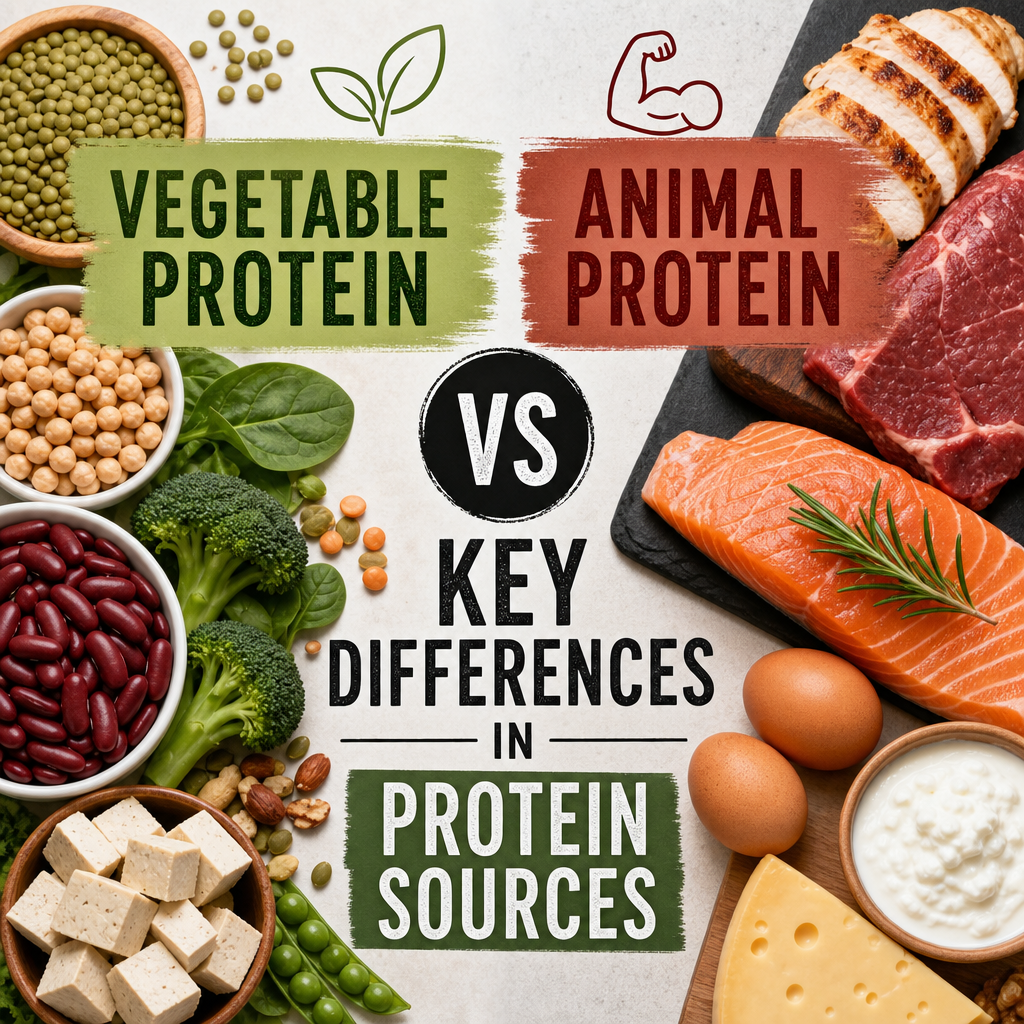
Vegetable Protein vs Animal Protein: What a Difference?
Protein is one of the most important nutrients in the diet. It helps build muscle, repair tissue, support hormones, and keep the body functioning well. But when it comes to choosing between vegetable protein and animal protein, many people wonder whether one is better than the other.
The truth is that both can play a valuable role in a healthy eating pattern. The difference comes down to nutrition, digestibility, health goals, and personal preference.
What Is Protein and Why Does It Matter?
Protein is made up of amino acids, often called the building blocks of life. Your body uses these amino acids for:
- Muscle growth and repair
- Immune support
- Enzyme and hormone production
- Healthy skin, hair, and nails
- Energy when needed
Because the body cannot make all amino acids on its own, food sources of protein are essential.
What Is Animal Protein?
Animal protein comes from foods such as:
- Meat
- Fish
- Eggs
- Dairy products
- Poultry
These foods are considered “complete” proteins because they contain all nine essential amino acids in the right amounts the body needs.
Benefits of Animal Protein
Animal protein is often praised for its high biological value. That means the body can use it efficiently. For people focused on muscle building or recovery, foods like meat, eggs, and dairy are convenient and dense sources of protein.
Other benefits include:
- High levels of vitamin B12
- Easily absorbed iron
- Zinc and other important minerals
- A complete amino acid profile
Potential Drawbacks
Not all animal protein sources are equal. Processed meats and fatty cuts may contain high levels of saturated fat, sodium, and preservatives. Eating too much processed meat has also been linked to certain long-term health concerns.
Choosing lean, less processed options can make a big difference.
What Is Vegetable Protein?
Vegetable protein comes from plant foods such as:
- Beans and lentils
- Chickpeas
- Soy products
- Nuts and seeds
- Whole grains
A single bean may not seem powerful, but beans are one of the most affordable and nutritious sources of vegetable protein available.
Benefits of Vegetable Protein
Vegetable protein offers more than just protein. Many plant-based sources also provide:
- Fiber
- Antioxidants
- Vitamins and minerals
- Lower saturated fat
- Compounds that support heart health
For example, a serving of bean salad or lentil soup delivers protein along with fiber that helps digestion and supports blood sugar balance.
Potential Drawbacks
Some plant proteins are “incomplete,” meaning they may be lower in one or more essential amino acids. However, this is less of a problem than many people think. Eating a variety of plant foods throughout the day usually provides all the amino acids your body needs.
For example, pairing beans with rice or eating hummus with whole grain bread can create a more balanced amino acid intake.
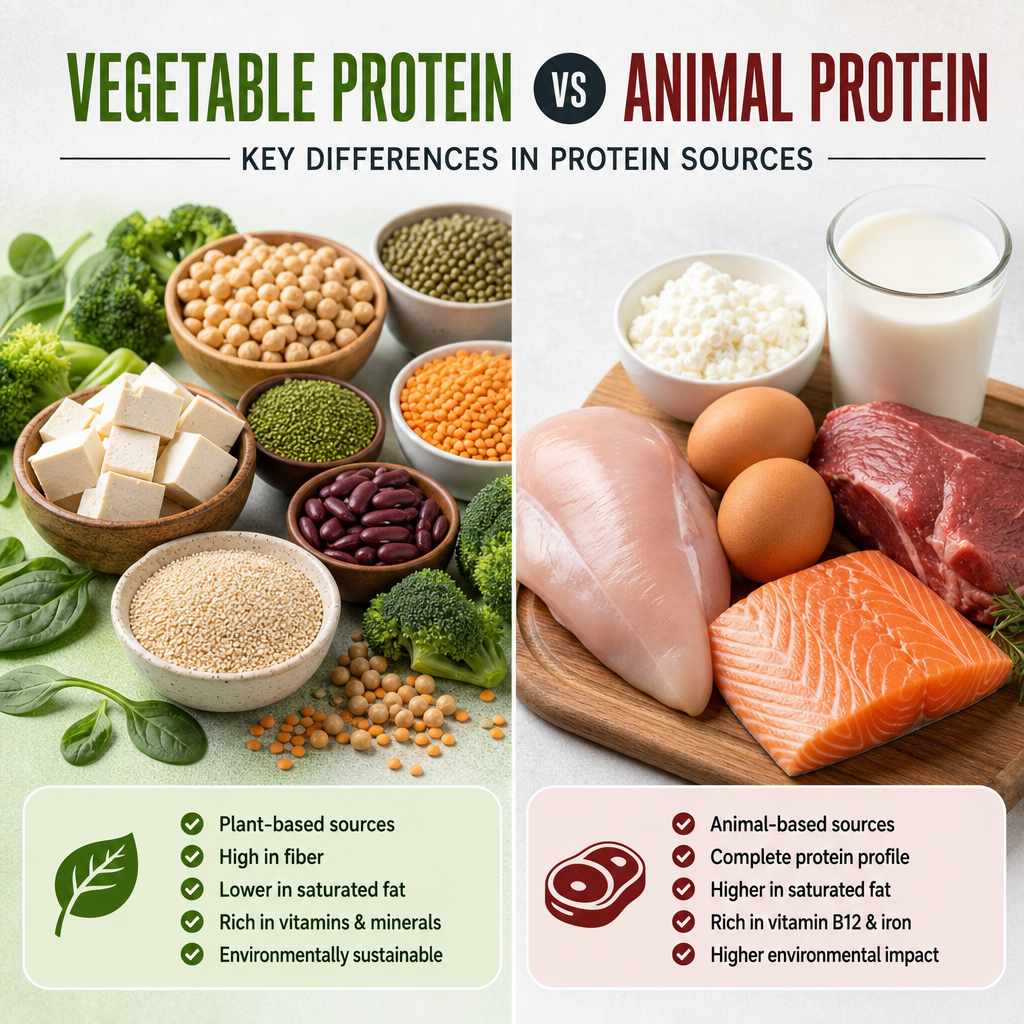
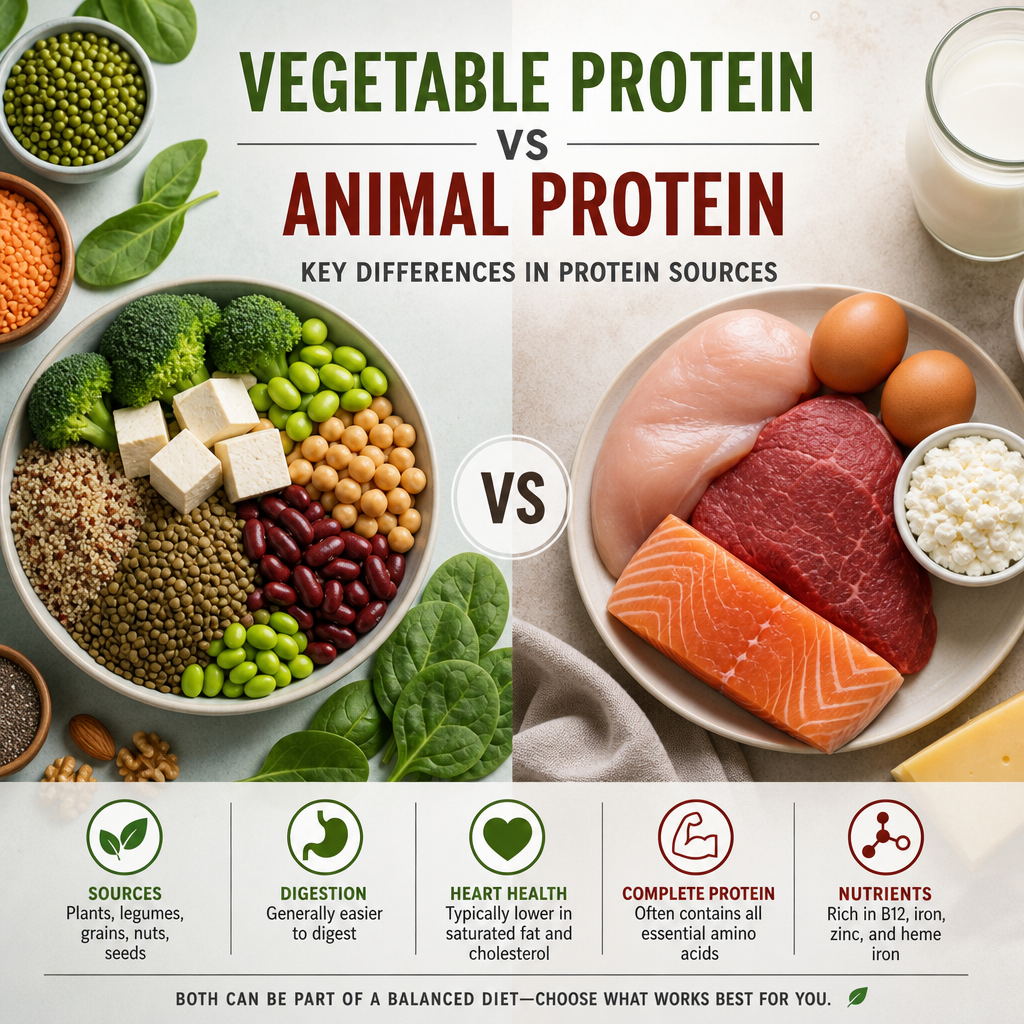
Vegetable Protein vs Animal Protein: Key Differences
When comparing vegetable protein and animal protein, several differences stand out.
1. Amino Acid Profile
Animal protein is usually complete, while many plant sources are not complete on their own. Still, varied plant meals can easily cover this gap.
2. Fiber Content
Animal protein contains no fiber. Vegetable protein sources like beans, lentils, and seeds often come with plenty of fiber, which supports gut and heart health.
3. Fat and Cholesterol
Many animal protein foods, especially red meat, can contain more saturated fat and cholesterol. Plant proteins are generally lower in both, especially when minimally processed.
4. Vitamins and Minerals
Animal protein provides vitamin B12 and heme iron, which are harder to get from plants. On the other hand, vegetable protein foods often bring magnesium, folate, and protective plant compounds.
5. Environmental Impact
In general, vegetable protein has a lower environmental footprint than animal protein. Foods like lentils, peas, and every humble bean often require fewer resources than large-scale meat production.
Which Type of Protein Is Better?
There is no one-size-fits-all answer. The best choice depends on your lifestyle, health goals, and overall diet.
Animal protein may be helpful for:
- Athletes with high protein needs
- People who want complete protein in smaller portions
- Those needing more vitamin B12 or iron
Vegetable protein may be ideal for:
- People focused on heart health
- Those wanting more fiber
- Anyone reducing saturated fat intake
- Individuals following plant-based diets
For many people, a mix of both works well.
Simple Ways to Balance Your Protein Intake
If you want the benefits of both vegetable protein and animal protein, try these practical ideas:
Add More Plant Protein
- Use black bean or chickpea salads for lunch
- Swap part of the meat in tacos with lentils
- Snack on nuts, seeds, or roasted chickpeas
- Try tofu or edamame in stir-fries
Choose Smarter Animal Protein
- Pick lean cuts of meat
- Eat more fish and poultry
- Limit heavily processed meats
- Keep portions balanced with vegetables and whole grains
Final Thoughts
The debate over vegetable protein versus animal protein is not about choosing a perfect winner. Both types of protein can support health when selected wisely.
Animal protein offers complete amino acids and certain key nutrients. Vegetable protein brings fiber, plant compounds, and often a lighter impact on health and the environment. Whether your plate includes a grilled chicken breast, a bowl of lentils, or a hearty bean stew, the goal is to build a balanced diet that fits your needs.
In the end, the real difference is not just where your protein comes from, but how it supports your whole lifestyle.