

Vegetarianism’s level: What a difference
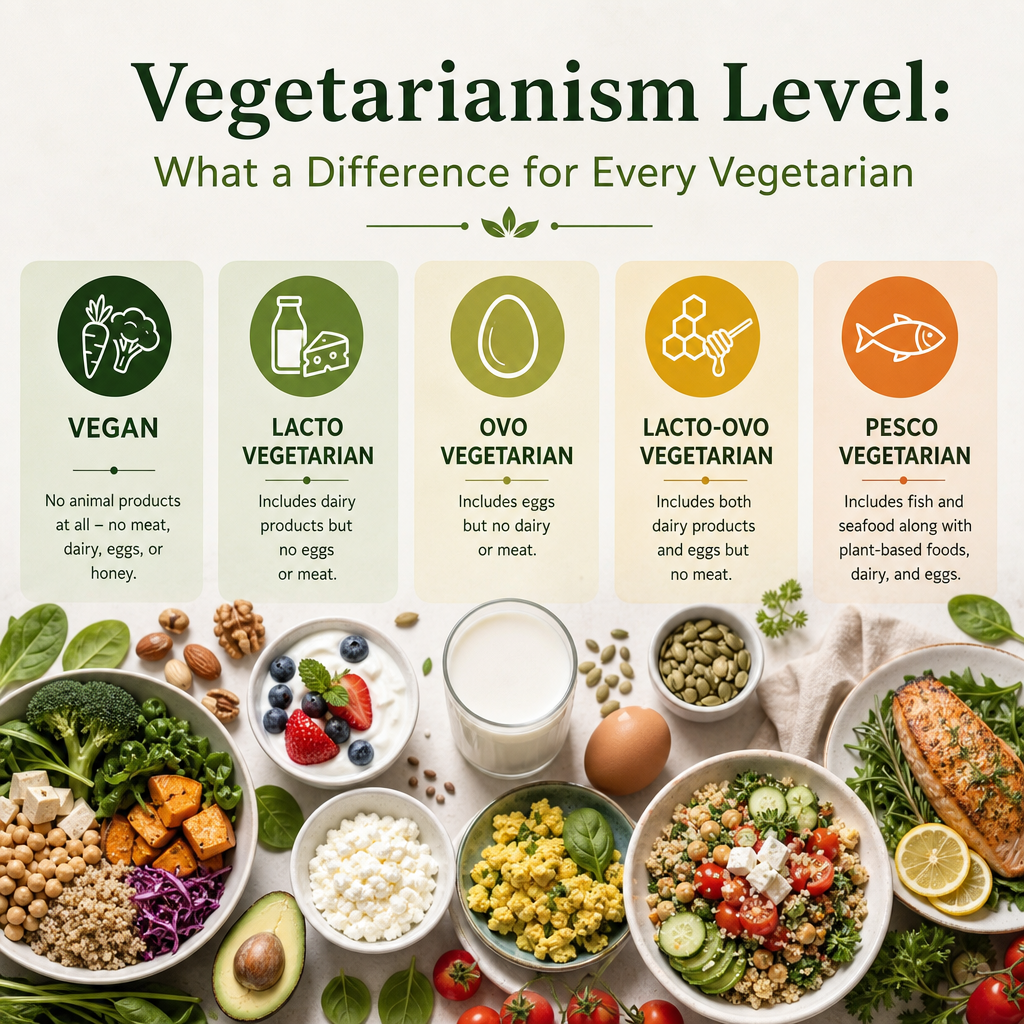
When people talk about diet choices, they often use broad labels. One of the most common is Vegetarian. Yet not every Vegetarian follows the exact same eating pattern. That is where Vegetarianism becomes more interesting. There is more than one level, and each level reflects different values, health goals, and lifestyle choices.
Understanding these differences helps remove confusion. It also makes it easier to respect how each person practices Vegetarianism in a way that works for them.
What does Vegetarianism really mean?
At its core, Vegetarianism is a way of eating that avoids meat. This usually includes beef, pork, chicken, and fish. However, the exact foods included beyond that can vary depending on the level of Vegetarianism a person chooses.
Some people become Vegetarian for ethical reasons. Others do it for health, environmental concerns, or religious beliefs. No matter the reason, the level someone follows can shape daily meals in a big way.
The main levels of Vegetarian eating
Not all Vegetarian diets look the same. Here are the most common levels.
Lacto-ovo Vegetarian
This is one of the most widely practiced forms of Vegetarianism. A lacto-ovo Vegetarian avoids meat and fish but still eats:
- Dairy products
- Eggs
- Plant-based foods like fruits, vegetables, grains, beans, nuts, and seeds
For many people, this level feels practical and balanced. It offers flexibility while still supporting the principles of Vegetarian living.
Lacto Vegetarian
A lacto Vegetarian excludes meat, fish, and eggs, but still includes dairy products.
This level is often chosen for cultural or religious reasons. Since dairy remains part of the diet, foods like milk, yogurt, and cheese can still provide variety and convenience.
Ovo Vegetarian
An ovo Vegetarian avoids meat, fish, and dairy, but continues to eat eggs.
This level is less common, but it works well for people who want to avoid dairy while still using eggs as a source of protein in meals.
Vegan as the strictest level
Although veganism is often discussed separately from Vegetarianism, many people see it as the strictest level on the Vegetarian spectrum. Vegans avoid all animal products, including:
- Meat
- Fish
- Dairy
- Eggs
- Honey in many cases
This level often extends beyond food into clothing, beauty products, and household choices.
Why the level matters
The level of Vegetarianism someone follows affects more than a shopping list. It influences nutrition, social experiences, meal planning, and even identity.
For example, a lacto-ovo Vegetarian may find it easier to eat at restaurants because eggs and dairy are widely available. A stricter level may require more preparation and label reading. Neither is better by default. The difference is about commitment, preference, and personal purpose.
The word level matters because it adds nuance. Instead of assuming all Vegetarians eat the same way, we can recognize that food choices exist on a spectrum.
Nutrition across every level
No matter the level, good planning is important. A well-balanced Vegetarian diet can provide many health benefits, including more fiber, a wide range of vitamins, and lower intake of saturated fat from meat.
Still, some nutrients deserve attention, such as:
- Protein
- Iron
- Vitamin B12
- Calcium
- Omega-3 fats
- Zinc
A Vegetarian can get these nutrients from foods like beans, lentils, tofu, eggs, dairy, fortified cereals, leafy greens, nuts, and seeds. The stricter the level, the more important it may be to plan carefully.
Choosing the right level for you
There is no single path that fits everyone. Some people start by cutting out red meat. Others move directly into full Vegetarianism. Over time, they may change their level based on how they feel, what they believe, or what their body needs.
It can help to ask simple questions:
What is my reason?
Are you motivated by health, ethics, sustainability, or curiosity? Your reason may shape the level that feels right.
What foods do I still want to include?
Some people are comfortable keeping eggs and dairy. Others prefer a more plant-based approach.
Can I maintain this long term?
The best level is one you can follow consistently and enjoy. A sustainable routine often works better than an overly strict plan that feels stressful.
A more thoughtful view of Vegetarianism
Vegetarianism is not one fixed rulebook. It is a broad lifestyle with different levels, each carrying its own meaning. That difference matters because it shows that being Vegetarian is not just a yes-or-no label.
From lacto-ovo to vegan, each level reflects a choice about how to eat and live. By understanding the levels of Vegetarianism, we can have better conversations, make informed decisions, and appreciate the variety within the Vegetarian world.
In the end, one small word changes the whole picture: level. And what a difference that makes.