

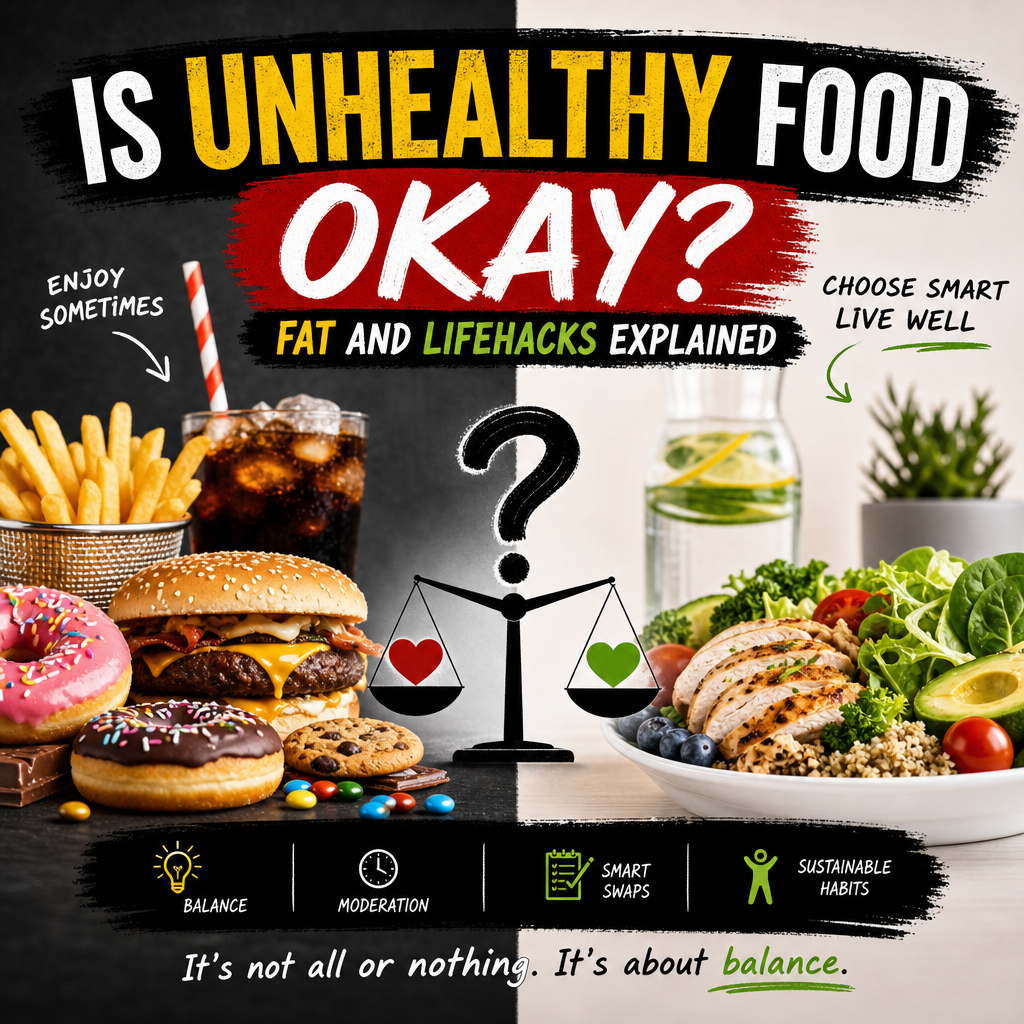
Junk Food, Is It Okay?

Junk food is one of those topics that starts arguments fast. Some people treat it like a guilty pleasure, while others see it as something to avoid completely. So, is junk food okay? The honest answer is yes—sometimes. It depends on how often you eat it, how much of it you eat, and what the rest of your diet looks like.
The real problem is not one burger, one bag of chips, or one slice of cake. The bigger issue starts when unhealthy food becomes a daily habit instead of an occasional treat.
What Counts as Junk Food?
Junk food usually refers to foods that are high in calories, sugar, salt, and fat, while being low in nutrients like fiber, vitamins, and minerals. Common examples include:
- Fried fast food
- Sugary drinks
- Candy and desserts
- Packaged snacks
- Instant noodles
- Processed meats
These foods are designed to taste good, be convenient, and keep you coming back for more. That does not make them evil, but it does mean they should be eaten with awareness.
Why People Love It
There is a reason junk food is so hard to resist. It is quick, cheap, and satisfying. For busy people, it often feels like the easiest option. It also connects to comfort, celebration, and habit.
After a long day, cooking a balanced meal can feel harder than ordering fries and a burger. In that sense, junk food is not just about hunger. It is often about stress, emotions, and convenience.
Is Unhealthy Food Always Bad?
Not necessarily. Eating unhealthy food once in a while is unlikely to harm a generally healthy lifestyle. A single fast-food meal does not define your health, just like one salad does not make you instantly fit.
The issue appears when junk food replaces nourishing meals regularly. A diet built mostly around highly processed foods may lead to:
- Low energy
- Poor digestion
- Weight gain
- Higher intake of sugar and saturated fat
- Increased risk of long-term health problems
Balance matters more than perfection. Being too strict can even backfire, leading to cravings and binge eating.
The Role of Fat in the Conversation
Many people hear the word fat and immediately think something is unhealthy. But not all fat is bad. Your body actually needs healthy fats for brain function, hormones, and energy.
The problem is that many junk foods contain large amounts of unhealthy fats, especially trans fats or excessive saturated fats, along with sugar and salt. That combination can make food very appealing while offering little nutritional value.
It helps to think of fat in two categories:
Healthy Sources of Fat
- Avocados
- Nuts and seeds
- Olive oil
- Fatty fish
Less Helpful Sources of Fat
- Deep-fried foods
- Highly processed snacks
- Some baked goods
- Fast food meals eaten too often
So the goal is not to fear fat. The goal is to choose better sources of it more often.
Lifehacks for Enjoying Junk Food Without Overdoing It
You do not need to swear off your favorite treats forever. A few smart Lifehacks can help you enjoy them in a more balanced way.
1. Do Not Eat It When You Are Starving
When you are extremely hungry, it is much easier to overeat. Try having fruit, yogurt, or a handful of nuts first if you know your next meal might be junk food.
2. Pick the Smallest Size
A small portion often satisfies the craving without turning one treat into a huge calorie overload.
3. Add Something Nutritious
If you are having pizza, add a salad. If you want a burger, include water and some fruit later in the day. Small additions can improve the overall meal.
4. Avoid Mindless Snacking
Eating chips straight from the bag while watching TV makes it easy to lose track. Put a portion in a bowl instead.
5. Follow the 80/20 Idea
Try to eat nourishing foods about 80% of the time and leave 20% for flexibility. This approach feels realistic and sustainable.
6. Do Not Label Foods as Forbidden
When food is seen as completely off-limits, cravings often become stronger. Giving yourself permission to enjoy a treat occasionally can reduce that pressure.
A Healthier Way to Think About It
Instead of asking whether junk food is “good” or “bad,” a better question is: How does it fit into my overall lifestyle? If most of your meals include whole foods, protein, fiber, vegetables, and healthy fat, then occasional junk food is usually not a major issue.
Food should support both health and enjoyment. You do not need to chase perfection to eat well. What matters most is your pattern over time.
Final Thoughts
So, is junk food okay? Yes, in moderation. Unhealthy food is not automatically a disaster, but it should not become the foundation of your diet either. Enjoying it once in a while is part of real life.
The key is balance, not guilt. With a few simple Lifehacks, a better understanding of fat, and a focus on long-term habits, you can make room for fun foods without letting them take over your health.
