Lessons learned about junk food often start with one simple truth: Unhealthy food may feel convenient and comforting, but it can drain your energy, add extra Fat, and create habits that are hard to break.
Junk food is everywhere. It is quick, cheap, salty, sweet, and designed to keep us coming back for more. For many people, it is tied to comfort, celebration, convenience, and even childhood memories. But over time, the real lessons learned about junk food become hard to ignore.
The biggest lesson is simple: Unhealthy food may satisfy a craving in the moment, but it often creates bigger problems later. From low energy to weight gain and long-term health risks, the cost is usually higher than it looks at first.
Why Junk Food Is So Hard to Resist
Junk food is built for temptation. It often combines sugar, salt, and Fat in a way that makes it extremely rewarding to the brain. That is why one bag of chips or one fast-food meal can quickly turn into a habit.
Many people do not overeat junk food because they lack discipline. They overeat it because these foods are engineered to be easy to consume and hard to stop eating. Add stress, lack of sleep, and busy schedules, and the pattern becomes even more common.
Common Reasons People Reach for Junk Food
- It is fast and convenient
- It is usually inexpensive upfront
- It provides short-term comfort
- It is heavily advertised
- It often feels easier than cooking at home
The Energy Trap of Unhealthy Food
One of the most practical lessons learned about junk food is that it rarely gives lasting energy. A sugary drink, fried snack, or ultra-processed meal may feel satisfying at first, but the effect fades quickly.
Instead of supporting focus and stamina, Unhealthy food often leads to an energy crash. Many people notice they feel tired, sluggish, or hungry again soon after eating it. This can create a cycle of constant snacking and poor food choices throughout the day.
In contrast, meals with protein, fiber, and whole ingredients tend to keep hunger under control for longer.
For more context on how processed eating habits affect daily health, see The Hidden Dangers of Junk Food.
Junk Food and Weight Gain
Another major lesson is how easily junk food contributes to excess calorie intake. Foods high in sugar and Fat are often dense in calories but low in fullness. That means it is possible to eat a lot without feeling truly satisfied.
Over time, this can affect body weight, digestion, sleep quality, and confidence. The issue is not that one burger or one dessert ruins health. The problem is the repeated pattern of relying on junk food as a normal daily habit.
This is where awareness matters. Many people do not realize how often small choices add up.
What the Statistics of Junk Food Reveal
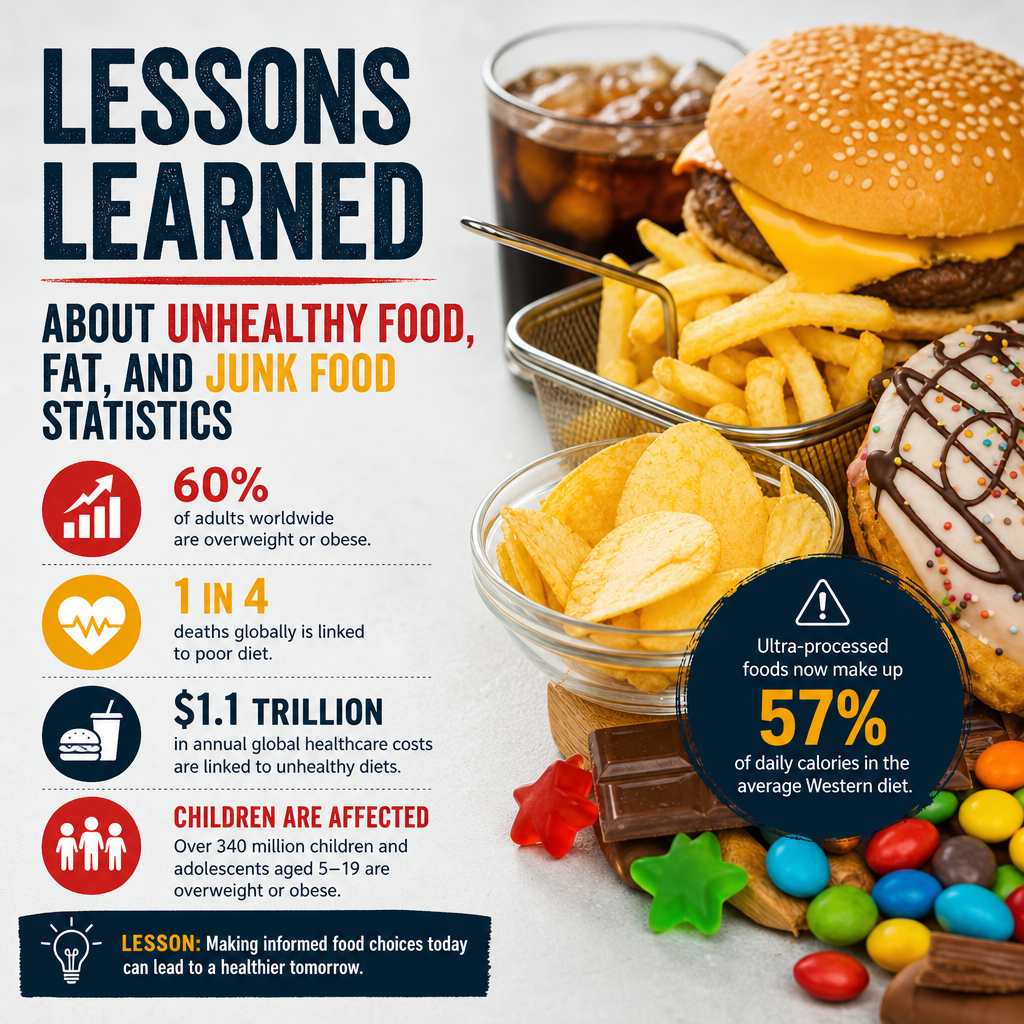
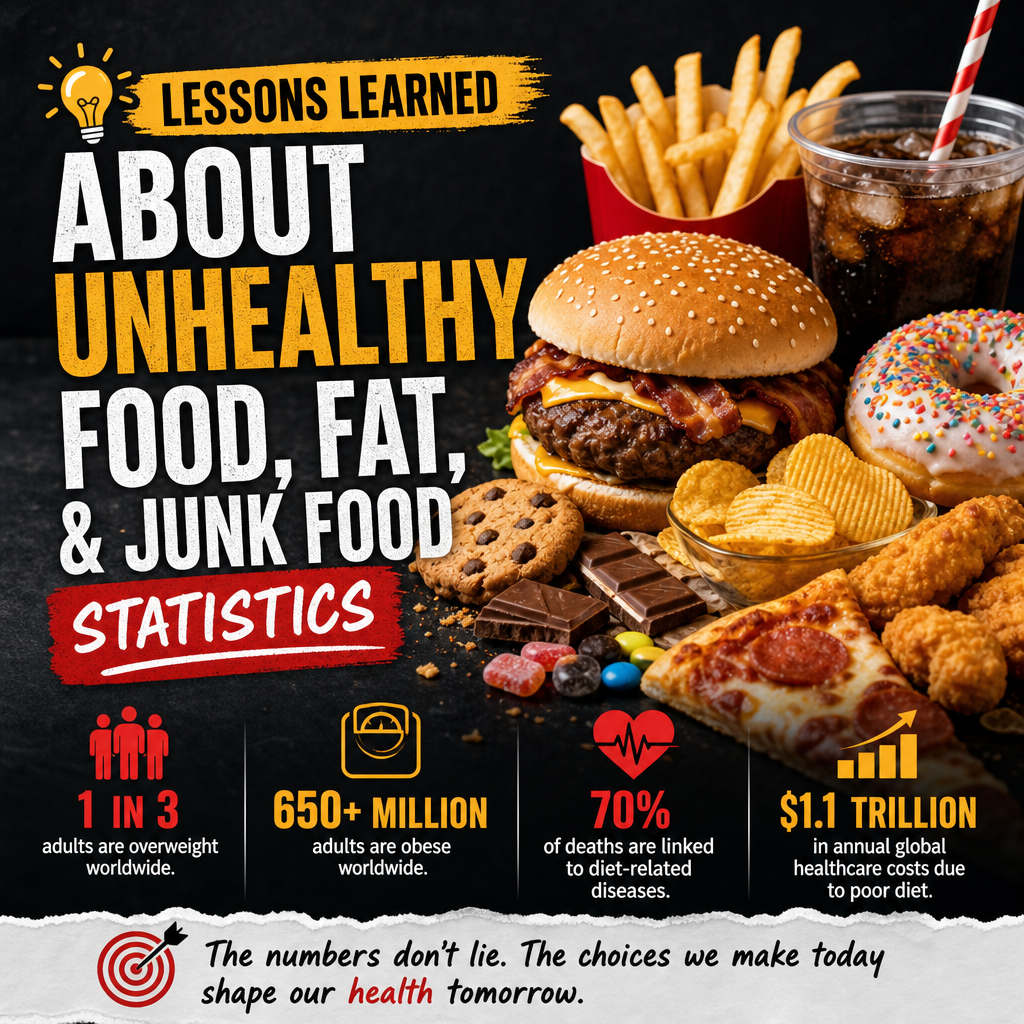
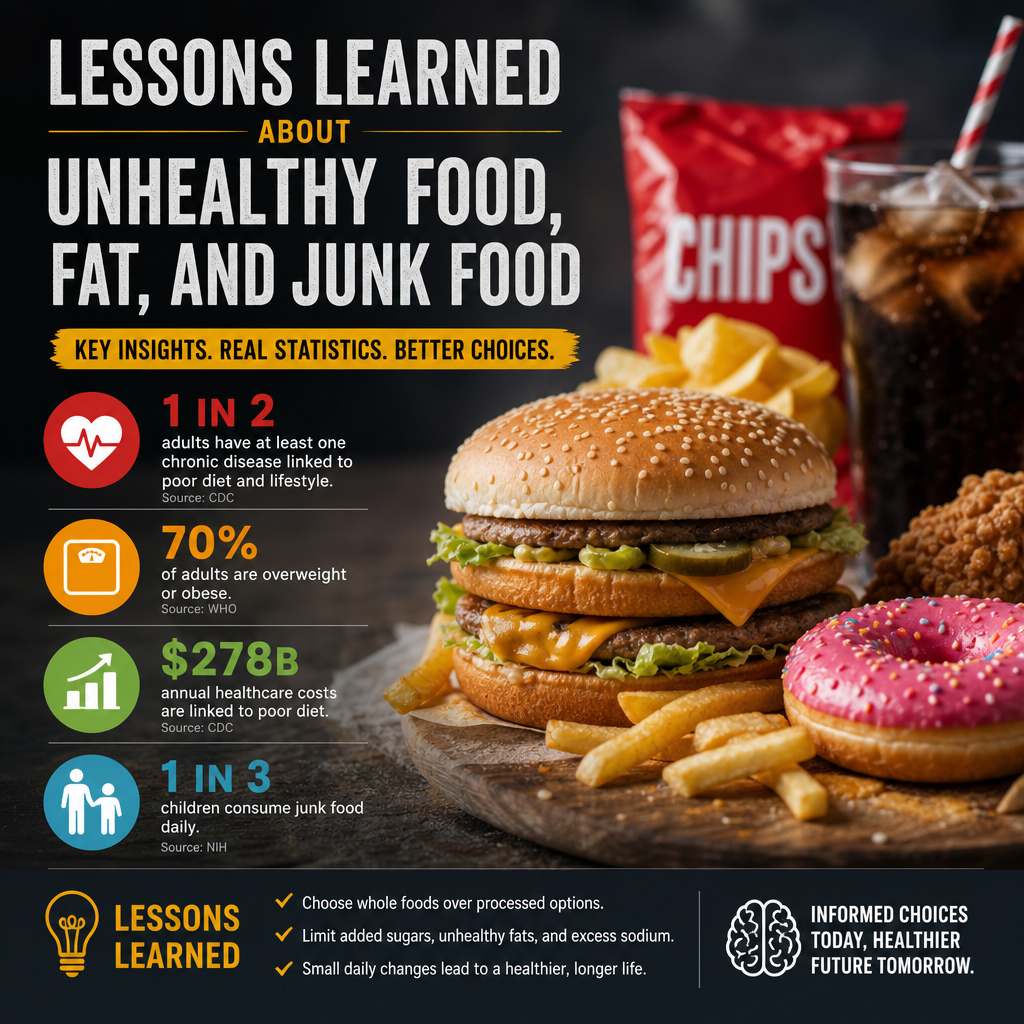
The statistics of junk food tell an important story. Across many countries, ultra-processed foods make up a large share of daily calorie intake. Research has also linked high consumption of processed snacks, sugary drinks, and fast food to obesity, heart disease, and type 2 diabetes.
While exact numbers vary by region, the trend is clear:
- People are eating more processed convenience foods than before
- Portion sizes have increased over time
- Sugary drinks remain a major source of empty calories
- Fast food consumption is strongly linked to poor diet quality
The statistics of junk food are not just numbers on a page. They reflect habits that shape daily health, family routines, and long-term well-being.
Small Lifehacks That Actually Help
The good news is that improving food habits does not require perfection. Small changes can make a big difference. Some of the best Lifehacks are simple, realistic, and easy to repeat.
Useful Lifehacks for Reducing Junk Food
- Keep healthy snacks visible and easy to grab
- Do not shop for groceries when hungry
- Drink water before reaching for a snack
- Prep simple meals ahead of busy days
- Avoid keeping too much junk food at home
- Read labels and watch for added sugar and hidden Fat
- Use smaller plates for high-calorie treats
These Lifehacks work because they reduce friction. When better choices become easier, habits improve naturally.
Balance Matters More Than Guilt
A key lesson learned about junk food is that guilt is not a strategy. Many people swing between strict dieting and overeating, which often leads to frustration. A more sustainable approach is balance.
Enjoying a treat once in a while is not the problem. The real goal is to make junk food an occasional choice rather than a daily default. Health improves when nutritious meals become the foundation and processed foods become the exception.
This mindset is more realistic and easier to maintain over time.
Final Thoughts
The most important lessons learned about junk food are not complicated. It is convenient, addictive, and easy to overdo. Unhealthy food can drain energy, encourage weight gain, and affect long-term health more than many people realize. The statistics of junk food support what many already feel in everyday life.
At the same time, change does not have to be extreme. A few smart Lifehacks, better planning, and more awareness can help reduce dependence on foods high in sugar and Fat. In the end, the lesson is not to fear junk food, but to understand it well enough to make better choices.