This Unhealthy food explains the key choices, value factors, and practical details readers need before making a decision. Junk food is everywhere. It is cheap, convenient, heavily advertised, and often designed to taste irresistible. Many of us grow up treating it as a reward, a quick meal, or a comfort after a long day. Over time, however, the lessons learned about junk food become hard to ignore.
The biggest lesson is simple: what feels convenient in the moment can become costly in the long run. From energy crashes to weight gain and poor eating habits, Unhealthy food often affects far more than just our appetite.
Why Junk Food Is So Hard to Resist

Junk food is usually high in sugar, salt, and Fat, which makes it highly appealing. These ingredients are combined to create strong cravings and repeat eating habits. Chips, soda, fast food, candy, and packaged snacks are made for taste and convenience, not for long-term health.
Another lesson is that junk food is often tied to emotion rather than hunger. People reach for it when they feel:
- Stressed
- Tired
- Bored
- Celebratory
- Overworked
That emotional connection can make breaking the habit much harder than simply “choosing better food.”
What Unhealthy Food Teaches Us
One of the clearest lessons learned about junk food is that not all calories feel the same in the body. A fast-food meal may be high in calories, but it often leaves a person hungry again soon after. In contrast, whole foods with fiber, protein, and healthy fats tend to keep people full longer. If you want a deeper look at how processed foods affect everyday choices, see this related article.
Short-Term Effects
Even in the short term, Unhealthy food can lead to:
- Sluggishness after meals
- Blood sugar spikes and crashes
- Poor concentration
- Digestive discomfort
- Increased cravings later in the day
These effects are easy to dismiss at first. But once they become frequent, they can shape mood, productivity, and overall well-being.
Long-Term Effects
The long-term lesson is even more serious. Regular junk food consumption may contribute to:
- Weight gain
- Higher cholesterol
- Increased risk of type 2 diabetes
- Heart-related issues
- Poor nutritional balance
This does not mean every treat is harmful. The lesson is about patterns, not perfection.
Looking at the Statistics of Junk Food
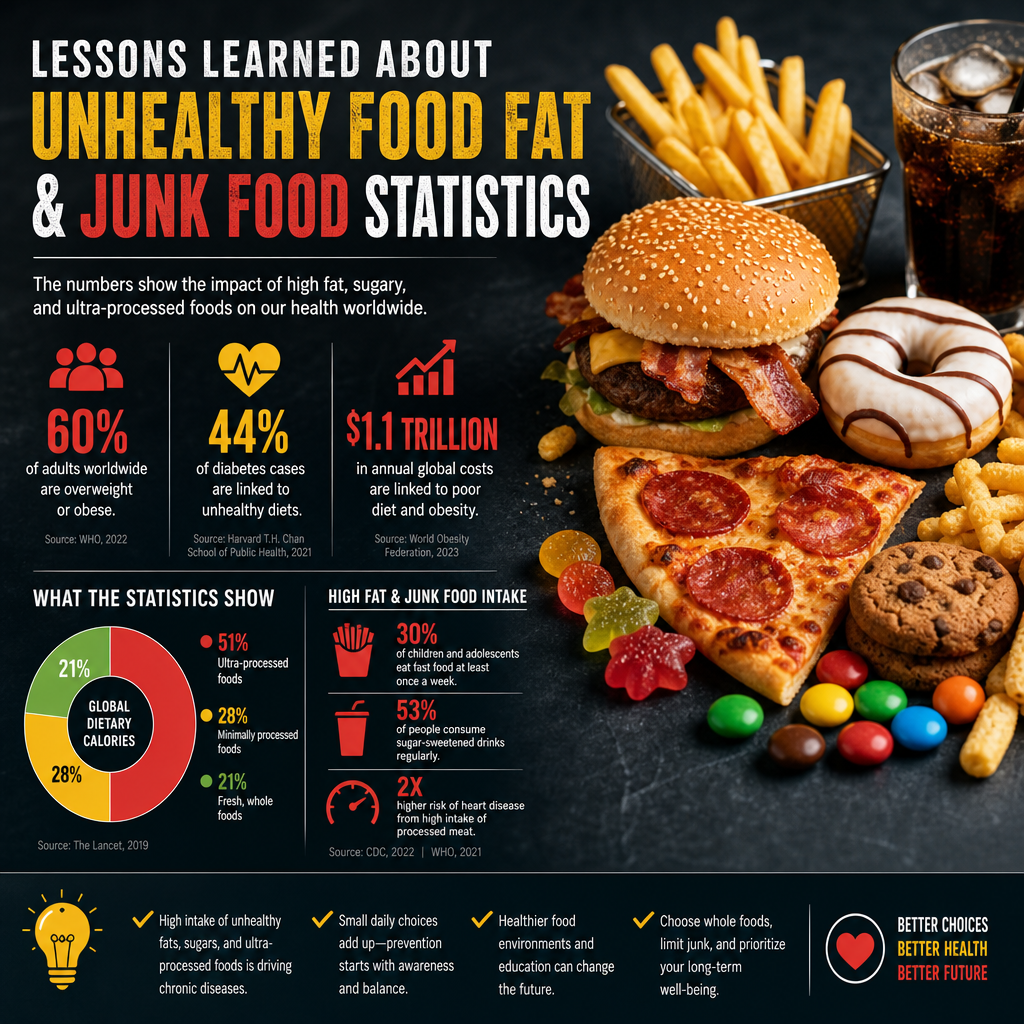
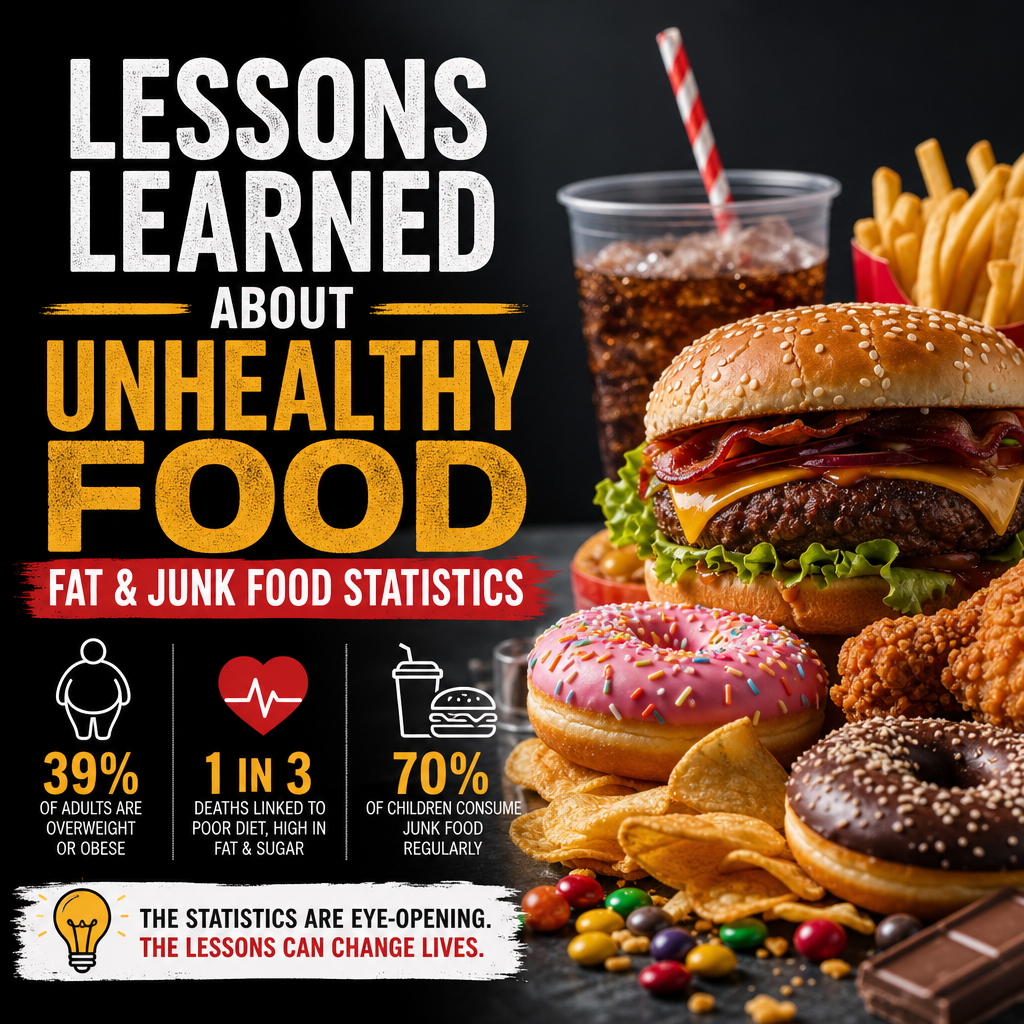
The statistics of junk food help explain why this issue matters. In many countries, processed foods make up a large share of daily calorie intake. Fast food consumption remains common among both adults and children, and sugary drinks continue to be a major source of excess sugar.
The statistics of junk food also show a link between high intake of ultra-processed foods and rising obesity rates. While individual choices matter, these numbers reveal a wider problem: unhealthy options are often easier to access than balanced meals.
This is an important lesson. Junk food is not just a personal weakness; it is part of a food environment built around speed, profit, and habit.
Lifehacks That Actually Help
The good news is that lessons learned about junk food can lead to smarter choices. Small changes often work better than strict diets.
Simple Lifehacks for Eating Better
Here are a few practical Lifehacks:
1. Do Not Shop Hungry
Impulse buying is much worse when you are hungry. A full stomach makes it easier to skip tempting snacks.
2. Keep Better Snacks Visible
If fruit, nuts, yogurt, or cut vegetables are easy to grab, they compete with junk food more effectively.
3. Read Labels
Many foods marketed as “healthy” still contain large amounts of sugar, sodium, or unhealthy Fat.
4. Avoid Drinking Your Calories
Soda, milkshakes, and energy drinks add up quickly without making you feel full.
5. Upgrade, Don’t Eliminate
Instead of banning every favorite food, try better versions. Homemade burgers, oven-baked potatoes, or dark chocolate can satisfy cravings with fewer downsides.
6. Plan for Busy Days
Many junk food choices happen when there is no time to cook. Preparing simple meals in advance can prevent last-minute fast-food decisions.
The Real Lesson: Awareness Beats Guilt
One of the most valuable lessons learned about junk food is that guilt does not solve the problem. Awareness does. When people understand why they crave certain foods, how those foods affect energy and health, and what triggers bad habits, they gain more control.
Healthy eating is not about never enjoying treats. It is about noticing the difference between occasional enjoyment and routine dependence. That shift in thinking can improve both physical health and peace of mind.
Final Thoughts
Junk food teaches an important lesson about modern eating: convenience and taste do not always equal nourishment. Unhealthy food may offer a quick reward, but over time it can cost energy, health, and balance. The statistics of junk food reinforce what many people already feel in daily life: these foods are easy to overconsume and hard to replace unless we act intentionally.
The good news is that better habits do not require extreme rules. A few smart Lifehacks, more awareness, and a willingness to make gradual changes can go a long way. In the end, the real lesson is not to fear junk food, but to understand it well enough to keep it in its proper place.